


09 Mar How to Look at Contemporary Art Without Feeling Confused
Introduction
Walking into a contemporary art gallery can feel intimidating. You might find yourself staring at an installation made of everyday objects and wondering, “Is this really art?” or “Am I supposed to understand something specific?” That reaction is more common than most people admit. Many visitors feel pressure to interpret everything correctly, as if there is a hidden message they are expected to decode.
The truth is that you do not need an art history degree, specialized vocabulary, or insider knowledge to appreciate contemporary art. There is no secret password required to participate. Contemporary art is not reserved for critics, curators, or collectors. It is made to be experienced by people with different backgrounds, perspectives, and levels of familiarity.
The goal of this guide is simple. Instead of standing in front of a work and thinking, “I don’t understand,” you will learn how to shift your mindset to “I am experiencing this.” That shift alone can change the way you engage with art and make the experience more personal and rewarding.

The Framework
Start With Your Gut Reaction
Before you analyze anything, pause and notice your immediate response. What do you feel when you first look at the work? Curiosity, confusion, boredom, irritation, delight, discomfort, excitement? Whatever arises is valid. Your first reaction is not something to dismiss. It is your most honest entry point.
Contemporary art often aims to provoke emotion or thought rather than to present a clear narrative. If a piece makes you uneasy, that reaction might be intentional. If it makes you smile without knowing why, that is meaningful too. Begin with your own human response, not with what you think you are supposed to feel.
This step is about connection. Art is not a puzzle to solve immediately. It is an encounter. Let yourself have that encounter without judgment.
Become a Detective: Observe the Details
Once you acknowledge your initial reaction, slow down and look more closely. Treat the artwork as if you are investigating it. Careful observation can reveal more than a quick glance ever will.
Start with the materials. Is it traditional paint on canvas, or does it include metal, fabric, plastic, or found objects? Materials matter. An artwork made from discarded items carries a different weight than one crafted from polished marble. The choice of material is often part of the meaning.
Next, describe what you literally see. List the shapes, colors, lines, textures, and patterns. Are the colors muted or vibrant? Are the lines sharp and controlled, or loose and chaotic? Is the surface smooth and precise, or rough and layered? Avoid interpretation for a moment and focus on description. This grounds your experience in concrete details.
Consider how the work was made. Are brushstrokes visible? Are there drips, tears, or imperfections? Or does it appear meticulously constructed? The method of making can suggest the artist’s intent or emotional state.
Finally, think about scale. Is the artwork massive and imposing, forcing you to step back? Or is it small and intimate, inviting you to lean in? Size changes how your body interacts with the piece, and that physical relationship is part of the experience.
Ask “What If?” Not “What Is It?”
Many people approach contemporary art with the question, “What is this supposed to be?” That question assumes there is a single correct answer waiting to be discovered. A more productive approach is to ask, “What if?”
What if the artist chose these colors to create a specific mood? What if the materials were selected to comment on everyday life or consumer culture? What story could this object tell if it could speak? What does it remind you of in your own memories or experiences?
Open-ended questions encourage exploration instead of anxiety. They allow space for multiple interpretations. Contemporary art often resists fixed meanings. By asking imaginative questions, you engage with the work as an active participant rather than a passive observer.
You can even imagine how the artwork might feel physically. If you could touch it, would it be cold, soft, heavy, fragile? Imagining sensory details deepens your connection and makes the experience more immersive.
Read the Clues (Optional)
After forming your own impressions, you can look at the title, the artist’s name, and the date. Think of these elements as clues, not as answers you failed to guess. They are additions to your experience, not corrections.
A title might completely reframe what you see. A seemingly abstract composition might take on new meaning once you read its name. The date can place the work within a particular moment in cultural or artistic history, offering context that enriches your interpretation.
You may also notice the artist’s background or other works they have created. This can provide insight into recurring themes or ideas. However, this step is optional. Your initial encounter with the artwork stands on its own. Context is there to deepen understanding, not to validate it.
The Mindset Shift
At its core, looking at contemporary art is not about proving that you understand it. It is about allowing yourself to connect with it. The value of the experience lies in the thoughts, emotions, and questions it sparks in you personally.
There is an outdated belief that art appreciation requires memorizing movements, dates, and biographies. While knowledge can certainly enhance understanding, it is not a prerequisite for meaningful engagement. A personal response is not inferior to an academic one. It is simply different.
Your interpretation will be shaped by your own background, memories, and beliefs. Someone else standing beside you may see something entirely different in the same piece. That diversity of perception is not a problem. It is part of what makes contemporary art compelling. There is no single correct emotional response. Your experience is legitimate.
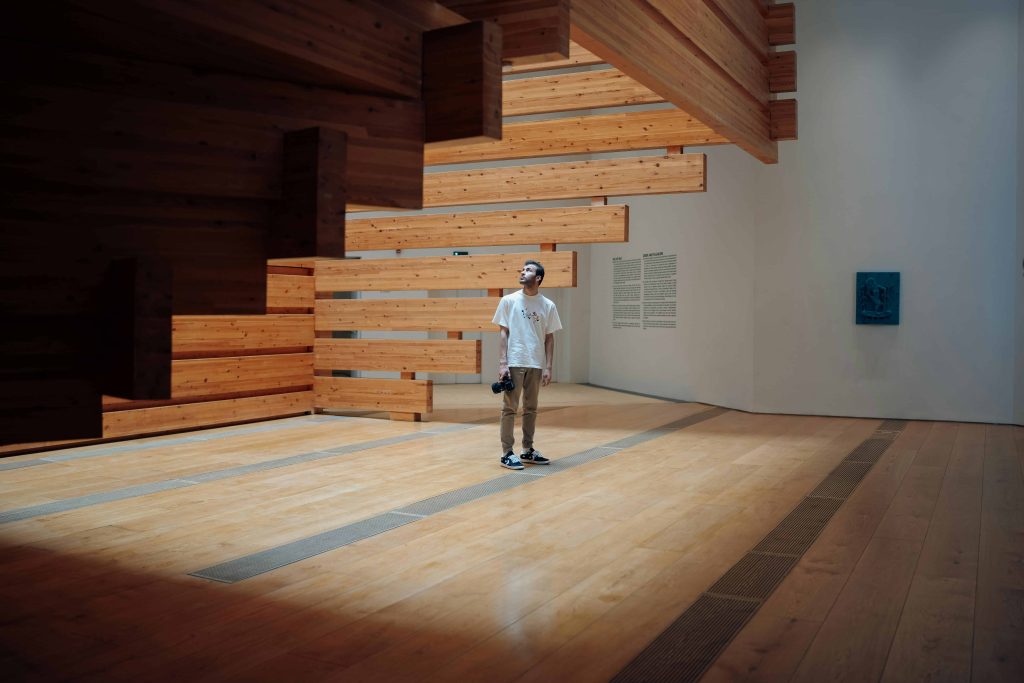
Conclusion
Looking at contemporary art becomes less intimidating when you follow a simple process. Begin with your gut reaction. Observe the details carefully. Ask open-ended questions instead of searching for a single correct answer. Then, if you choose, read the contextual clues that add depth to your understanding.
The next time you encounter a contemporary artwork, try this method with just one piece. Spend a few focused minutes applying these four steps. Whether you are browsing art online or visiting a local gallery, approach the work with curiosity rather than self-doubt.
Art is not a test. It is a conversation. Your perspective, emotions, and reflections are part of that exchange. You do not need permission to participate. Go look with confidence.
Key Takeaways
- You do not need formal education or specialized vocabulary to appreciate contemporary art. Personal experience is enough.
- Start with your gut reaction. Your immediate emotional response is a valid and meaningful entry point.
- Slow down and observe details such as materials, color, scale, texture, and technique before trying to interpret meaning.
- Ask open-ended questions like “What if?” instead of searching for one correct answer.
- Context such as the title, date, and artist background can deepen understanding, but it is optional.
- Focus on connection rather than comprehension. Contemporary art is about experience, not passing a test.
- Different interpretations are normal. Your perspective is shaped by your own background, and that makes your response legitimate.
FAQs
Do I need background knowledge in art history to appreciate contemporary art?
No. While art history and theory can provide context, they are not required for meaningful engagement. Contemporary art invites personal interpretation. Your emotional response, observations, and questions are valid starting points. Knowledge can enrich the experience, but curiosity and openness matter far more than credentials.
What should I do if I genuinely dislike a contemporary artwork?
Disliking a piece is still a meaningful response. Instead of dismissing it, ask yourself why it bothers you. Is it the subject, the materials, the scale, or the concept? Examining your discomfort can reveal insights about your preferences and assumptions, making the experience productive rather than frustrating.
How long should I spend looking at one artwork?
There is no fixed rule, but most people look for only a few seconds. Try staying with a piece for at least one to two minutes. Slow observation often reveals details, textures, or patterns that shift your understanding and deepen your connection beyond a first impression.
Every serious collector eventually faces the tension between passion and practicality, and this piece takes an honest look at the logistical pressures, spatial constraints, and emotional weight that come with maintaining a growing private collection in today’s increasingly space-conscious world.